14 Jan How to Choose the Right Aisle Width for Your Forklift
How to Choose the Right Aisle Width for Your Forklift
Choosing the correct aisle width is one of the most important decisions in warehouse design. The right aisle width improves forklift safety, productivity, picking efficiency, and storage capacity. The wrong aisle width can slow down workflow, increase the risk of collisions, and limit the types of forklifts you can use.
If you’re planning a new warehouse layout or evaluating your current one, understanding how to determine the minimum aisle width for your forklifts is essential.
What Is Aisle Width and Why Does It Matter?
Aisle width refers to the distance between storage racks, shelving, or other fixed structures. This space determines how much room a forklift needs to turn, maneuver, and handle loads safely.
Aisle width impacts:
- Warehouse production
- Overall storage density
- Forklift turning radius and maneuverability
- Operator visibility and safety
- Equipment selection (standard, narrow-aisle, or very-narrow-aisle forklifts) 
Optimizing aisle width ensures you get the best balance between storage capacity and operational efficiency.
Key Factors That Determine Minimum Aisle Width
To find the correct aisle width for your warehouse, consider the following factors:
- Forklift Type
Different forklifts require different aisle widths. For example:
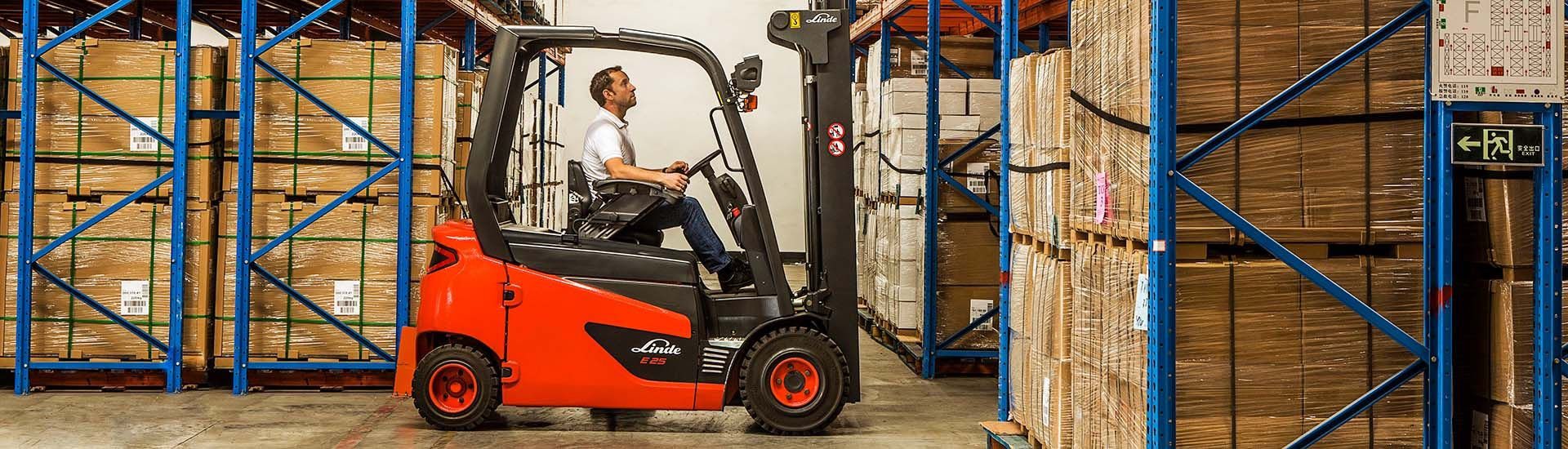
- Counterbalance forklifts typically need 10–13 ft aisles
- Reach trucks operate in 8–10 ft aisles
- Turret trucks / VNA trucks work in 5–7 ft aisles
Choosing the right forklift type can dramatically change your warehouse layout potential.
- Turning Radius
The forklift’s turning radius is one of the biggest determinants of aisle width. A larger turning radius requires more space to complete a 90° or 180° turn with a load.
Tip: Always check the manufacturer’s turning radius specs for the exact model you’re using.
- Load Length & Load Size
Your aisle width must also account for the length of the load, not just the forklift.
Example:
A 48-inch pallet extends the effective turning area. Larger loads like long lumber, furniture, or pipes require even more space.
If you are handling longer loads such as lumber or pipe, you can still have narrow aisles if you use a multi-directional forklift designed for longer material.
- Safety Clearance
OSHA and best practices recommend additional space for:
- Operator visibility
- Pedestrian safety
- Rack protection
- Avoiding product damage
Most warehouses add 6–12 inches of buffer space per side to keep operations safe.
How to Calculate the Right Aisle Width
A commonly used formula for calculating forklift aisle width is:
Aisle Width = (Forklift Right Angle Stack + Load Length + Clearance)
Where:
- Right Angle Stack = how much space the forklift needs to turn into a pallet position
- Load Length = typically 48 inches, unless handling oversized loads
- Clearance = usually 6–12 inches on each side
If you need help calculating it precisely, Advanced Material Handling Systems can assist.
Common Aisle Width Recommendations
| Forklift Type | Typical Aisle Width |
| Electric Counterbalance | 10–13 ft |
| Internal Combustion Forklift | 12–14 ft |
| Reach Truck | 8–10 ft |
| Order Picker | 7–9 ft |
| Turret Truck (VNA) | 5–7 ft |
These ranges help guide you, but exact measurements depend on your building layout and equipment.
Why Optimized Aisle Width Boosts Warehouse Efficiency
Choosing the right aisle width can:
- Increase pallet positions without expanding your building
- Improve operator confidence and reduce accidents
- Decrease travel time and improve material flow
- Support automation and modern warehouse systems
Small layout changes can unlock significant long-term savings.
Need Help Choosing the Right Aisle Width?
Advanced Material Handling Systems specializes in warehouse layout optimization, forklift selection, and material handling solutions. Our consultants can analyze your equipment, inventory, and workflow to determine the safest, most efficient aisle width for your operation.
Whether you’re redesigning your warehouse or planning for expansion, we’re here to help.
Call us today at 678-528-2998
www.advancedmhs.com
Sorry, the comment form is closed at this time.